When I was just a tiny 6-year-old, I embarked on my epic dance journey. Picture this: me busting out moves to the energetic beats of Bollywood music, having an absolute blast. The hopping around, the “thumkas” (rhythmic jerk of waist and hip 🙂)- oh, what fun! One day I saw my sister learning a different form of dance, and I really liked what she was doing. My sister told me she was learning Kathak. I pushed my parents to let me learn the same dance as my sister. It took a lot of convincing (because I was too young at the time) of my Kathak dance teacher to allow me to learn the dance. Once everyone agreed, my journey began into the classical dance world of Kathak!
Kathak is one of the eight forms of Indian classical dances. This dance stemmed from Uttar Pradesh in North India. Kathak word is derived from the Sanskrit word “Katha” which means “story”. The word “Kathakar” was used to describe the one who tells the story. You can still see this story-telling aspect in the present-day version of Kathak. This dance form use vivid facial expressions, extensive footwork, and hand gestures to tell a story.
Kathak has many different components. One of the most important ones is taal. The taal is the track playing in the background. There are multiple different kinds of taals, each with it’s own unique characteristics. There is Teentaal, a cycle with 16 counts, Rupaak, a cycle with 7 counts, and many more. The taal provides as the whole background for dancing!
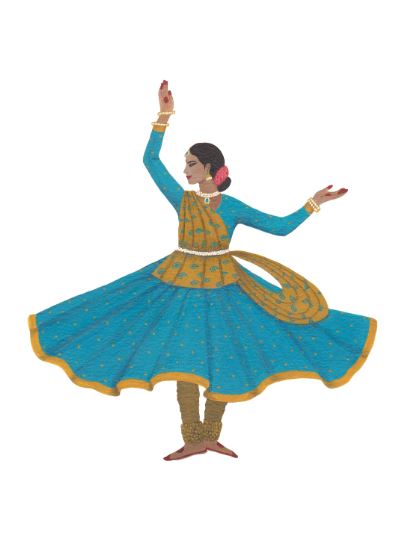
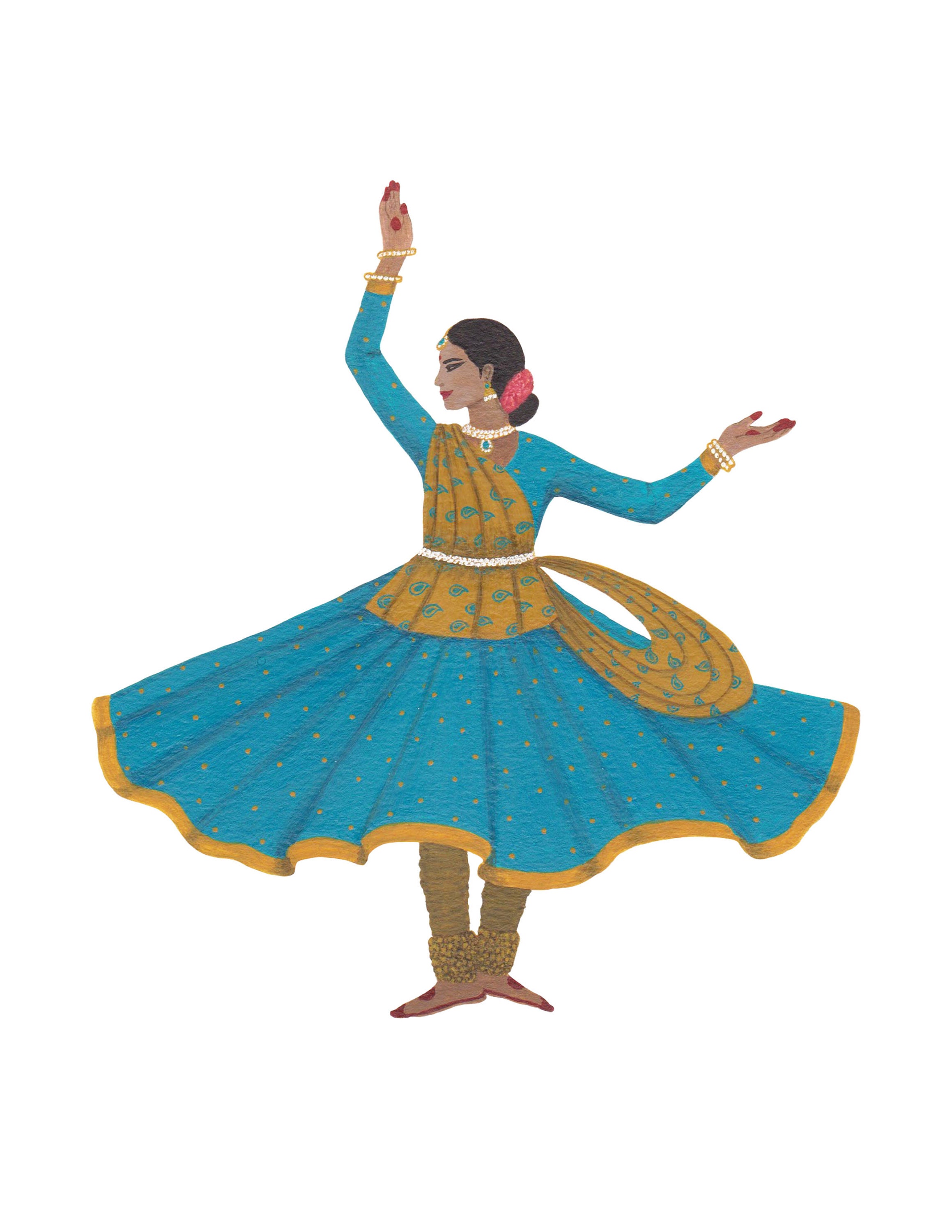
Another important aspect of Kathak is the footwork. Kathak is known for its fast footwork that dancers use without moving the torso. In the past, Kathak dancers used to do footwork with a glass on their head, to show that their torso didn’t move! Not only fast footwork, but fast spins also make Kathak different from other classical dances. These are only enhanced by the tinkling bells that dancers tie around their feet called ghungroos, and the flare of their anarkalis (dresses) as they spin quickly.
Last but not least, a big section of Kathak is abhinaya. Abhinaya is the act of portraying a character or scene. In Kathak, abhinaya is portrayed through facial movements and hand gestures, called mudras. These mudras are used to create hand symbols that represent certain characters.
Kathak is a culmination of all of these things; the taal, the footwork, the costumes, the abhinaya, and more. But altogether, it has become one of my favorite dances. Kathak has such a rich history, coming from the royal courts and mixing with other dance styles over time to become what it is today. I am grateful to have been able to learn about such an amazing dance!
Sources Cited
Women performing Indian classical dance Kathak. https://i.etsystatic.com/14671236/r/il/dc0eb6/4146156546/il_fullxfull.4146156546_4gp3.jpg. Accessed 19 May 2024.
 An Artist's Perspective
Leave a comment